Guess the Object
A crop of an ordinary object, magnified until it is a texture rather than a thing. The first rung is 6.5x, and where in the picture it lands is decided by a hash of the round rather than by the centre of the frame, so you are not reliably looking at the important part.
The pool is 109 objects and it is broader than the word suggests: a stapler and a fire hydrant, but also a geode, an artichoke, a Ferris wheel and a vacuum tube. Half the difficulty is that you have quietly assumed a scale, and the scale is wrong.
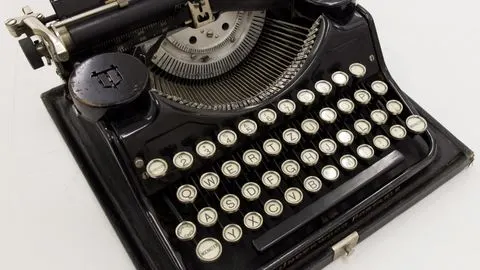
Name an everyday object photographed far too close.
Play Guess the ObjectMaterial first, shape second
At 6.5x you are looking at a surface, so read the surface. Injection-moulded plastic has a slight orange-peel texture and a parting line where the mould halves met. Brushed aluminium has parallel scratches all running one way. Cast iron is pitted. Blown glass has a meniscus at every edge and a bright specular highlight that plastic never quite manages.
Machining marks are almost as good as a label. A helical thread, a knurled grip, a hex socket, a Phillips cross — each of these belongs to a small family of objects. Woven fabric, moulded rubber and turned wood are similarly narrow.
Then look for scale cues. Dust, fingerprints and a shallow depth of field mean the object is small and the photograph was taken close. Weathering, rust streaks and a hard blue sky at the edge of the frame mean the object is large and outdoors, which cuts a hundred candidates down to about a dozen.
The ladder
6.5x, 4.3x, 2.9x, 2x, 1.35x. The final rung is not the full picture — it is still a slight crop, which is why a round can end with you looking at something you would recognise instantly if you could see two more centimetres of it.
The step that usually decides a round is the middle one. Going from 4.3x to 2.9x is where an edge or a corner enters the frame, and an edge gives you a silhouette, which is what recognition actually runs on.
Where the photographs come from
Each object is keyed to an English Wikipedia article chosen for a clean, well-lit lead photograph — the kind that survives being magnified this far. The image is fetched at play time from Wikimedia's pre-rendered 1280px width, which is about a fifth of the bytes of the original and holds up fine under a 6.5x crop.
This is also the game that survives a dead network. Every object carries an emoji as a stand-in, and if Wikipedia cannot be reached the round zooms into that instead. It is a worse game and a completely playable one.
Scoring
Ten rounds, five rungs: 1000, 620, 380, 240, 150. A wrong guess costs a rung, and because the answer list is 109 items long and searchable, the temptation to fire off near-misses is strong. Typing a category into the search box to see what exists is free; submitting one is not.