Guess the Country
A panorama drops you on an ordinary road, and you have thirty seconds to look around before the round ends. There is no monument, no skyline and no helpful sign pointing at the border. There is a road surface, some markings, whatever grows by the side of it, and the traffic.
The 55 locations were each checked to be official Street View car imagery rather than a user-uploaded photosphere, and they sit on ordinary streets rather than at landmarks. Everything you need is in the furniture of the road.
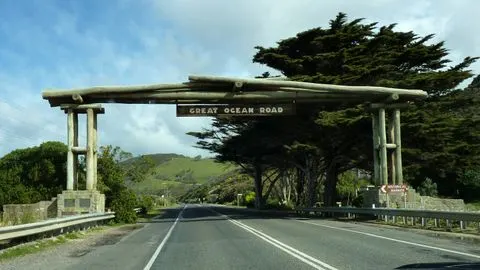
Look around a street and work out which country you're in.
Play Guess the CountryWhat to look at first
Which side of the road the traffic is on cuts the world roughly into a third and two thirds, and it is the single fastest read available. Then the centre line: yellow in the Americas, in Japan and in much of South East Asia, white across Europe, Africa and Oceania. A double yellow line down the middle of a two-lane road is a strong North American tell.
Utility poles are the next best thing. Wooden poles with pot-shaped transformers hanging off them are the Americas and the Philippines; concrete poles with a square section are much of Asia; buried cables and no poles at all are western Europe. Bollards, guardrails and kilometre markers are all designed nationally and are strikingly consistent within a country — the black-and-white striped posts along a European roadside differ in shape from one country to the next.
Number plates carry colour information at surprising distance. A yellow rear plate reads as the Netherlands, the United Kingdom or a handful of others; a long white European plate with a blue band on the left is EU or its neighbours; the wider, squarer plate of the Americas and Japan is a different shape entirely before you can read a character of it.
Reading the land
Vegetation dates and places a photograph faster than architecture does. Eucalyptus stands mean Australia or a country that imported them. Palms tell you the latitude and, by species, more than that. Red laterite soil at the road edge is a tropical tell across Africa, Brazil and parts of South Asia.
The sun is a compass and a hemisphere check. If the shadows at midday fall south you are north of the tropics, and if they fall north you are south of them. In the far north the light stays low and long all day, which is its own signature.
Language on signage is the obvious one, and worth checking last rather than first, because it is often absent for a full 360-degree turn. When you do find text, look at the diacritics rather than the words: a circumflex, a cedilla, a tilde or a ring over an A each rule out most of a continent.
The clock and the clue ladder
Thirty seconds per round, running from the moment it starts. Buying a clue does not reset it, deliberately — otherwise skipping would be a way to buy time as well as information.
Three clues are available. The first names the region, which narrows 124 possible answers to somewhere between ten and twenty-eight. The second is a written fact chosen not to give the game away — that minor roads carry a D number and the traffic police are a branch of the armed forces, for instance, which is France without saying France. The third is the country's first letter.
The map, and what is missing from it
The 55 locations cover seven regions: twelve in Europe, eleven in Asia, nine in Africa, eight in South America, six in the Middle East, five in North America and the Caribbean, and four in Oceania. The answer list, though, is all 124 countries the site knows capitals for — narrowing the guess list to the countries actually in the deck would hand over most of the answer.
Several countries are absent for lack of official coverage, including China, India, Egypt, Saudi Arabia and Morocco. The panorama comes from Google's keyless iframe embed, which is why the place-name label in the corner is covered up: that label is the answer. Google's logo, the Terms link and the imagery attribution along the bottom are left alone, because covering a label is fine and hiding attribution is not.
Scoring
Eight rounds, worth 1000, 620, 380 and 240 as you spend clues, plus a speed bonus of up to 160 that decays over 20 seconds — which in a game with a 30-second clock is a genuine tension. Running out of time scores the round zero, exactly as a skip would.