Guess the Celebrity
A portrait behind a nine-pixel blur, then four, then one and a half. Three rungs is the shortest ladder in the whole set, which makes this the least forgiving game here: one wrong guess costs a third of your chances.
119 faces — screen actors from the silent era to last year, musicians, athletes and a handful of other public figures. The pool is broader than the name suggests, and expecting only actors is how people lose rounds.
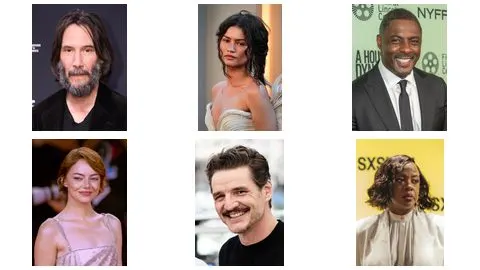
Name the famous face as it comes into focus.
Play Guess the CelebrityWhat survives a blur
Not the eyes. A blur destroys fine detail first, and the features people think they recognise faces by — eye shape, mouth, the details of a nose — are the first things to go. What survives is low-frequency information: the outline of the hair, the width of the jaw, the relationship between the darkness of the hair and the darkness of the skin, and where the shadows fall.
So read the silhouette. Hair volume and hairline shape are the strongest signals at the first rung, followed by facial hair, glasses and the angle of the head. A very high contrast between a pale face and dark hair, with a hard shadow under the jaw, is a studio portrait; a soft even wash is a red-carpet photograph shot with a flash.
The image itself dates the subject. Black and white with heavy contrast and a soft focus is a mid-century studio portrait, which narrows the field to about a dozen people in this deck. A slightly grainy colour photograph with saturated skin tones is 1970s or 1980s. Modern press photography is sharp, cool and evenly lit even under nine pixels of blur.
Three rungs, no more
9px blur, 4px, 1.5px, and each rung also pulls the image in slightly — 1.26x, 1.14x, 1.05x — because a blur samples beyond the edge of the picture and without that overscan the outer band of the portrait fades into the background.
At 4px most people are recognisable if you already had a candidate in mind, and at 1.5px almost everyone is. The game is therefore really played at the first rung, and the correct instinct is to name the shortlist out loud before buying anything: which four people have that hair.
Who is actually in the deck
About half the pool is film: Meryl Streep and Tom Hanks through to Lupita Nyong'o and Margot Robbie, with a substantial international section — Toshiro Mifune, Michelle Yeoh, Tony Leung, Shah Rukh Khan, Amitabh Bachchan — and a classical block from Chaplin and Bogart to Sidney Poitier. Then roughly thirty musicians, twenty athletes, and a short tail of Musk, Gates, Jobs, Obama, Attenborough, Hawking and Mandela.
Actor articles turn out to be the most fragile seeds in the project. A bare name is very often a disambiguation page — Chris Evans is a British broadcaster first — and a fair number of working actors have no freely licensed photograph at all. Every title in the list was checked against the live Wikipedia summary API for a real page with a real lead image.
Scoring
Ten rounds and three rungs: 1000, 620, 380. That is the whole ladder, so the arithmetic is unusually brutal — two wrong guesses puts you on the last rung with 380 at stake, and a third ends the round at zero.
The compensating factor is the speed bonus. Recognising a face is instantaneous when it happens, and answering inside a couple of seconds is worth an extra 150 or so, which across ten rounds is worth more than a rung.