Guess the Board Game
Two windows onto a blurred picture, and the picture is either box art or a photograph of a board. Which of those it is happens to be the first useful thing you learn, and it is usually legible through the blur before a single window opens.
56 games, and the range is genuinely five thousand years: backgammon at around 3000 BC, go at about 500 BC, xiangqi, dominoes, checkers, shogi and chess before printing, and then everything from Monopoly in 1935 to Wingspan in 2019.
Name the board game from a few windows of the box.
Play Guess the Board GameBoard or box
Anything published since roughly 1990 leads with box art. Everything older leads with a photograph of the board or the pieces, because that is the image its Wikipedia article carries. A wooden board and a cardboard box read very differently through a blur, which is why this game blurs the unopened area instead of blanking it.
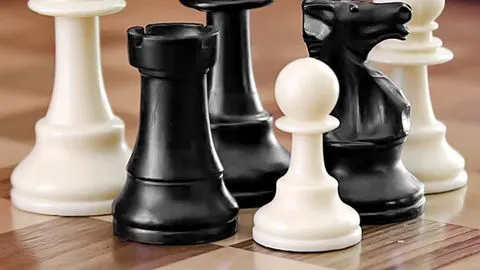
If it is a board, count and shape the grid. An 8x8 chequered grid is chess or checkers, and the pieces separate them instantly. A 19x19 grid of intersections with black and white stones is go. A grid with a river across the middle is xiangqi. Points arranged in triangles around a bar is backgammon. A cross-shaped track is ludo, and a ladder painted over squares is exactly what it sounds like.
If it is a box, era-date the graphic design. Mid-century American games have a photograph of a delighted family or a bold flat illustration with a heavy sans-serif logo. Modern European designer games have a painted scene, a logo in the top-left corner, and small icons along one edge — Catan, Carcassonne, Agricola, Wingspan all follow that grammar.
The ambiguity is real
The old games are where rounds are lost. A wooden grid and a handful of turned pieces could be any of six things, and no number of extra windows resolves it if you have not identified the grid geometry. The move there is to open windows quickly and cheaply until one lands on the pieces rather than the board, since piece shape separates shogi from chess from xiangqi immediately.
The modern games are the opposite: they give up their logo early, and once the typeface is visible the round is over. If two windows land on a corner with lettering in it, commit.
The ladder and the deck
2 windows, then 6, 13, 24 and 36 out of 48, opened in a fixed order per round. The frame shapes itself to the picture, because box art is not one shape and a fixed frame letterboxes it — after which windows near the edge open onto blank bars instead of onto the game.
The 56 titles were each checked against Wikipedia for a real lead image. Operation, Betrayal at House on the Hill and Clue: The Great Museum Caper were dropped because their articles carry none. The four games older than printing use the conventional approximate date for the game in something like its modern form, rendered as BC in the reveal caption.
Scoring
Ten rounds at 1000, 620, 380, 240 and 150. This deck rewards breadth over depth: knowing that Hive, Blokus, Dixit and Splendor exist is worth more here than knowing any of them well, because the round is decided by the picture rather than by the rules.